The Power of Place: Expanding Access to Mental Health Support in Portage County
Coleman Health Services
Services
Architecture
Interior Design
Programming
Schematic Design
Experiential Graphic Design
Furniture Planning
Owner Representation
Location
Ravenna, Ohio
Program Highlights
Crisis Stabilization Unit (CSU)
Behavioral Health Crisis Unit (BHCU – Adult)
Behavioral Health Crisis Unit (BHCU – Youth)
Meeting a Moment of Urgency with Design
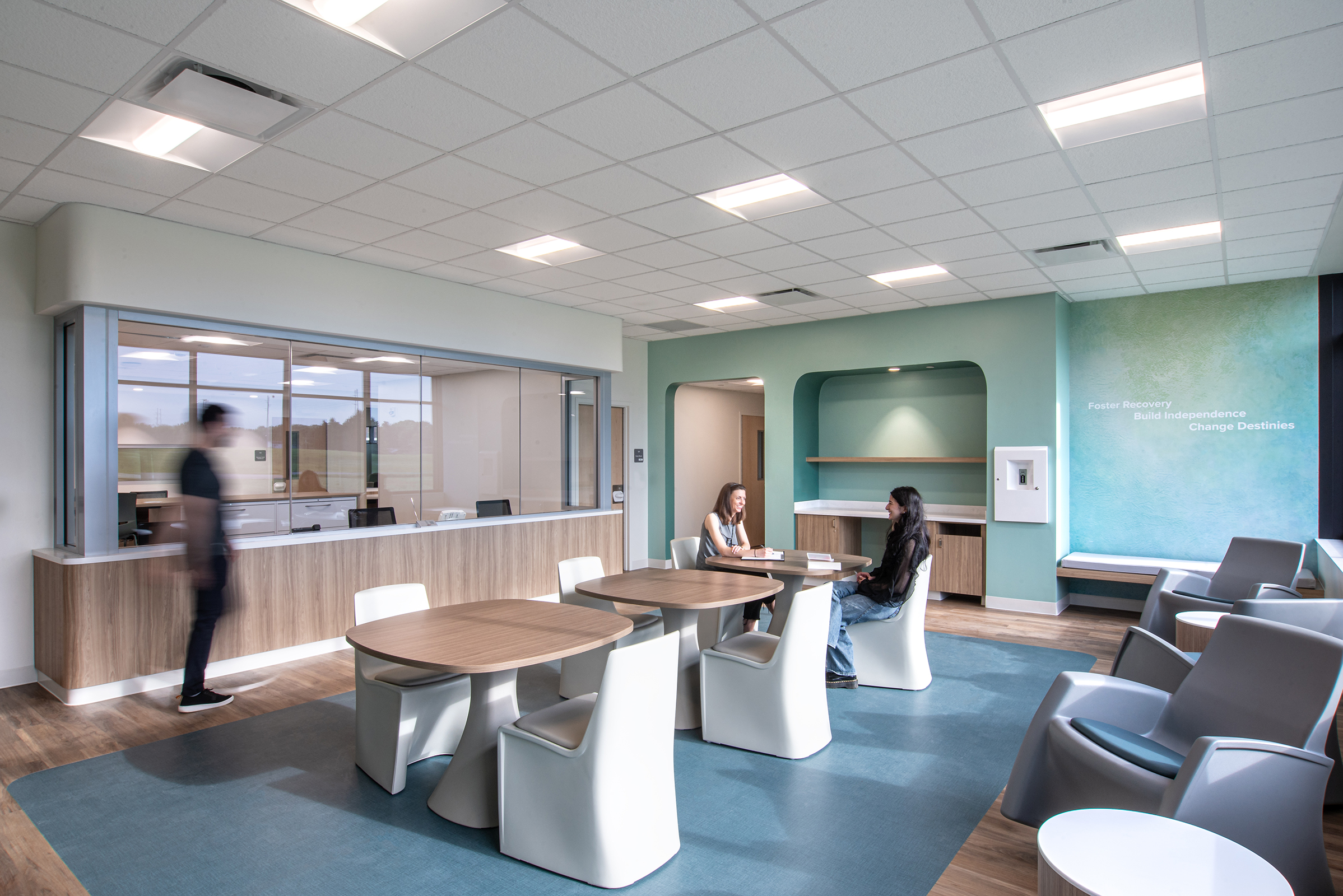
With behavioral health needs on the rise across Ohio, Coleman Health Services broke ground on its Portage Crisis Center in early 2024. Located in Ravenna, OH, this new 12,150 sq. ft. addition to the existing Sue Hetrick Building responds to a critical gap in behavioral healthcare.
Through a multi-disciplinary scope of services, +Detail partnered with Coleman Health Services and the Portage County Mental Health & Recovery Board to design a space that is trauma-informed, responsive, and dignifying to those in crisis. From schematic design to owner representation, +Detail worked with executive leadership, providers, and community stakeholders to ensure every element of the space supports, care, connection, and calm.
Designing for Dignity in Crisis
The new Portage Crisis Center includes three integrated treatment areas:
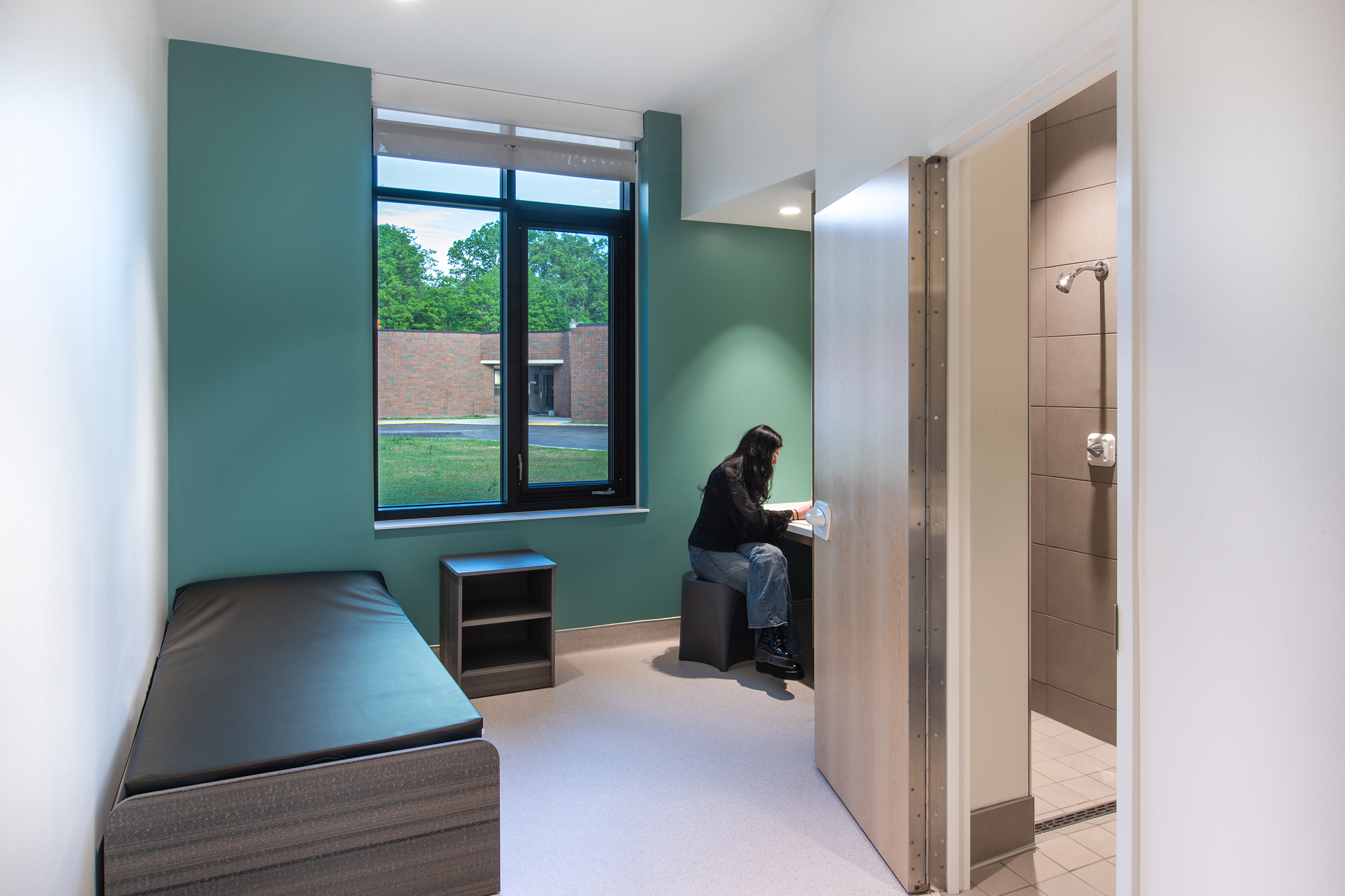
- Crisis Stabilization Unit (CSU) A voluntary unit with twelve beds (eight singles and two double rooms), where individuals can stay for 5–14 days to stabilize and recover.
- Behavioral Health Crisis Unit (BHCU – Adult)
A 5-chair, 23-hour involuntary hold space for adults needing immediate psychiatric assessment and de-escalation. - Behavioral Health Crisis Unit (BHCU – Youth)
A 4-chair unit for youth under 18 requiring rapid behavioral health intervention, designed with family in mind.
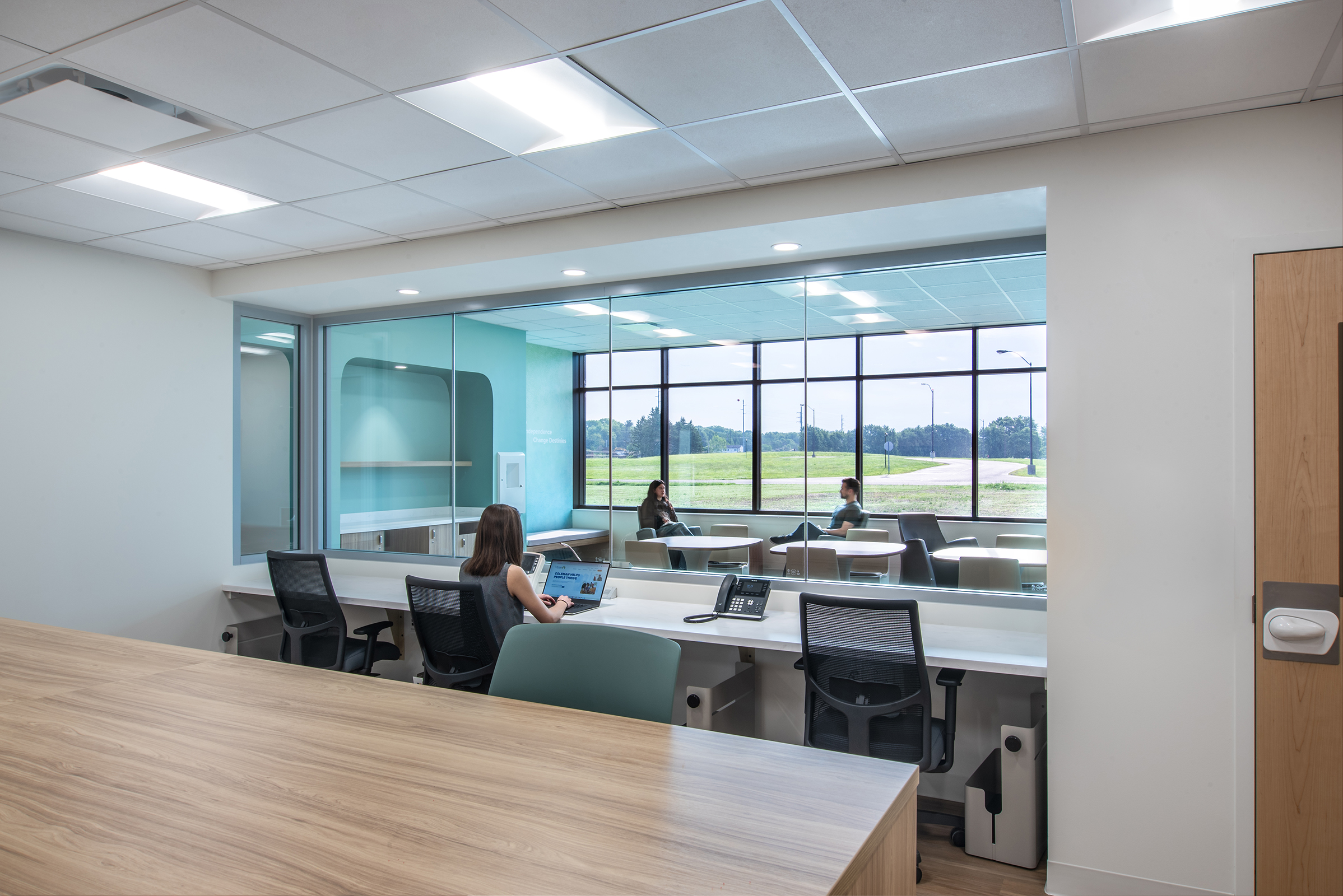
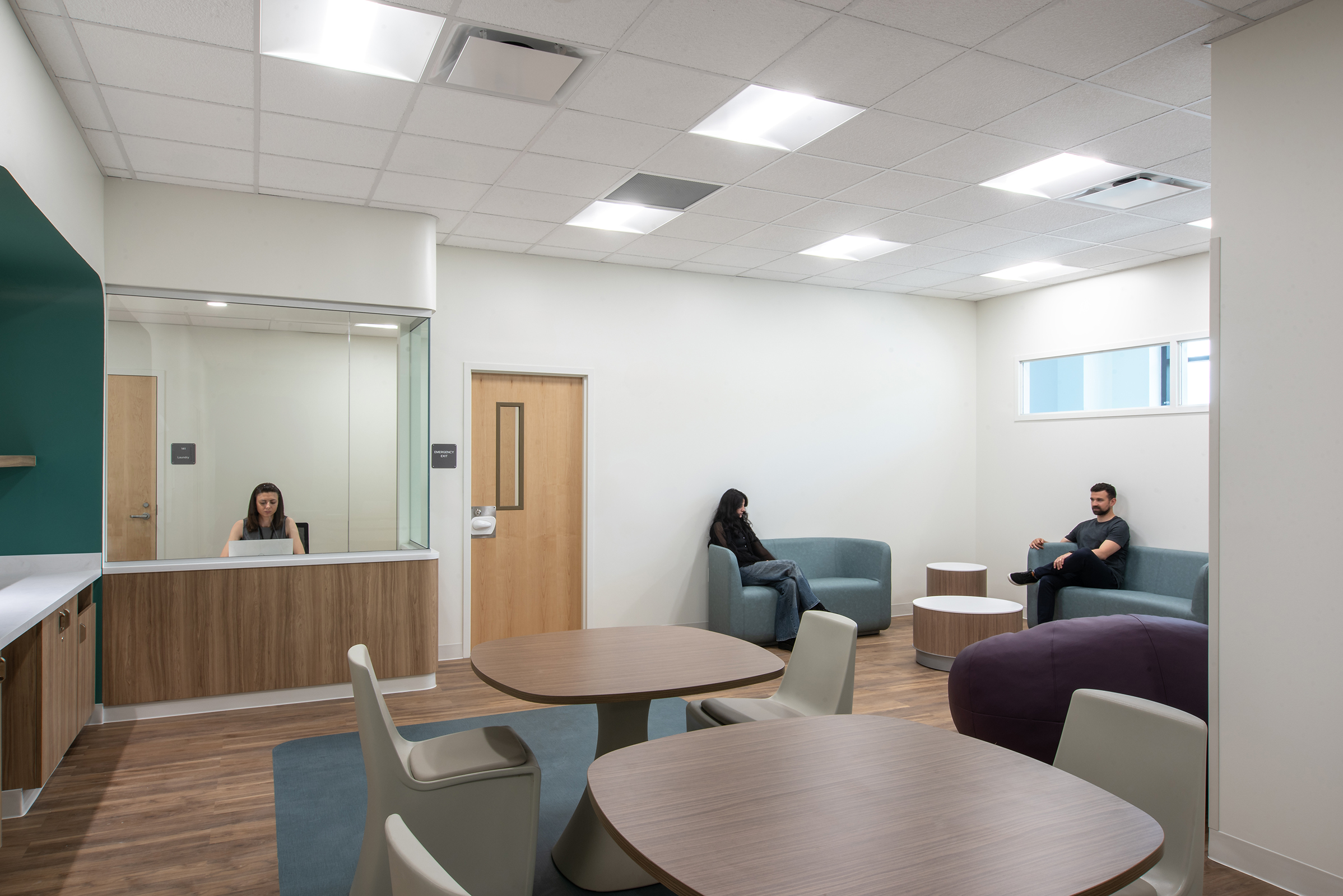
All three spaces are visible from a single shared nursing station. This is a key safety and operational feature resolved through thoughtful floor plan design with a thorough understanding of staff workflow and client comfort.
Architecture with Accountability
As a publicly funded project using American Rescue Plan Act (ARPA) dollars, the project needed to be on budget, on time, and within tight regulatory constraints. The team faced a challenging timeline to secure a guaranteed maximum price and move forward with construction, as they needed to meet federal spending deadlines or risk losing essential funds.
By utilizing the Construction Manager at Risk (CMR) project delivery method, the team worked nimbly with contractors and stakeholders to value-engineer the project without compromising its core purpose. Despite cost challenges and program adjustments, +Detail ensured the final design provided a dignified recovery space that would improve operational workflows.
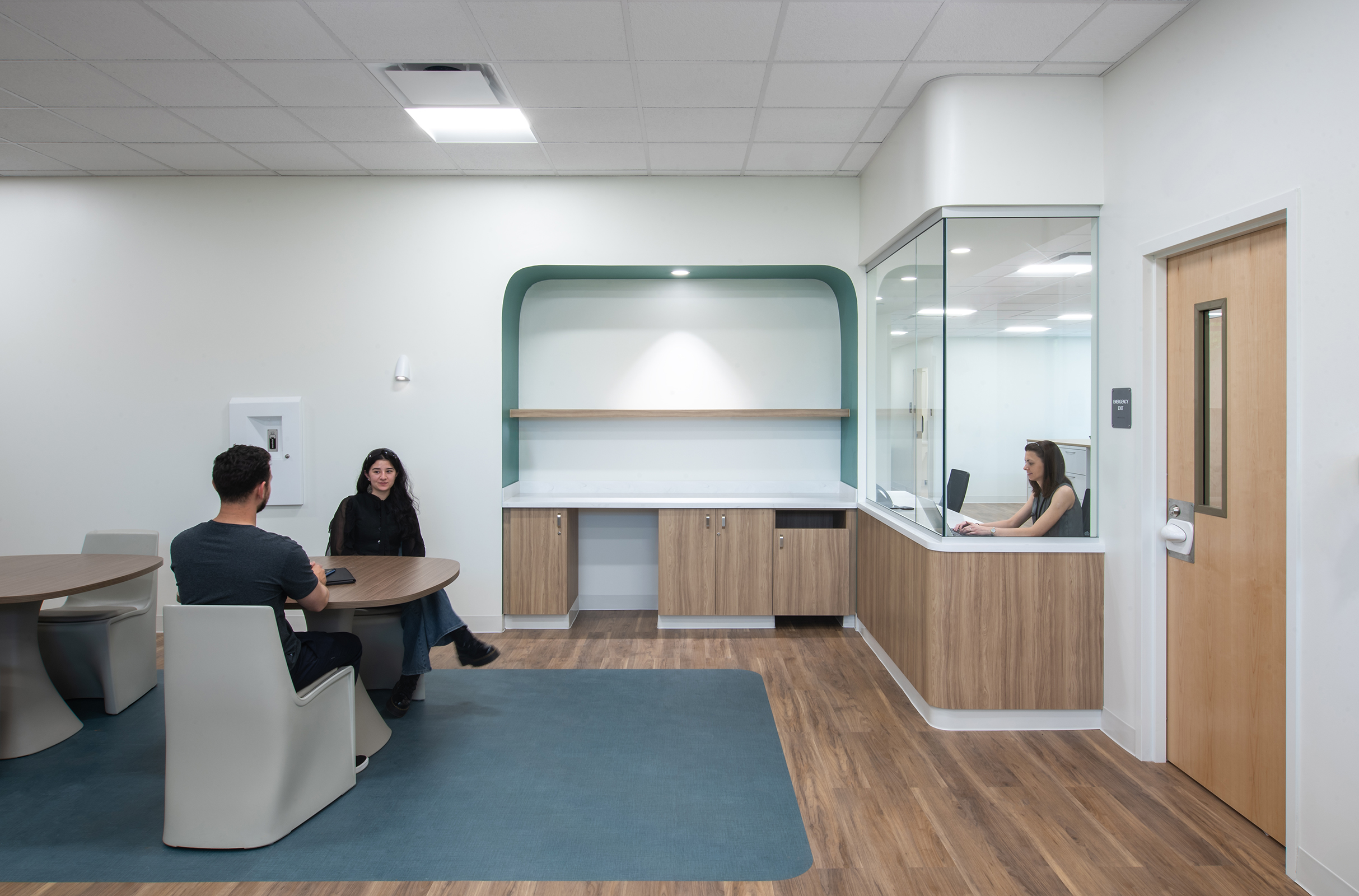
Balancing Safety, Softness, and Sustainability
Behavioral health design requires a nuanced approach, combining compassionate aesthetics with strict safety protocols. Every material, furnishing, and architectural decision was filtered through this lens.
+Detail leveraged guidelines from FGI, Ohio Department of Behavioral Health, and behavioral health design research to inform material selection:
- Ligature-resistant fixtures for patient and staff safety
- Durable, warm surfaces to create a welcoming feel
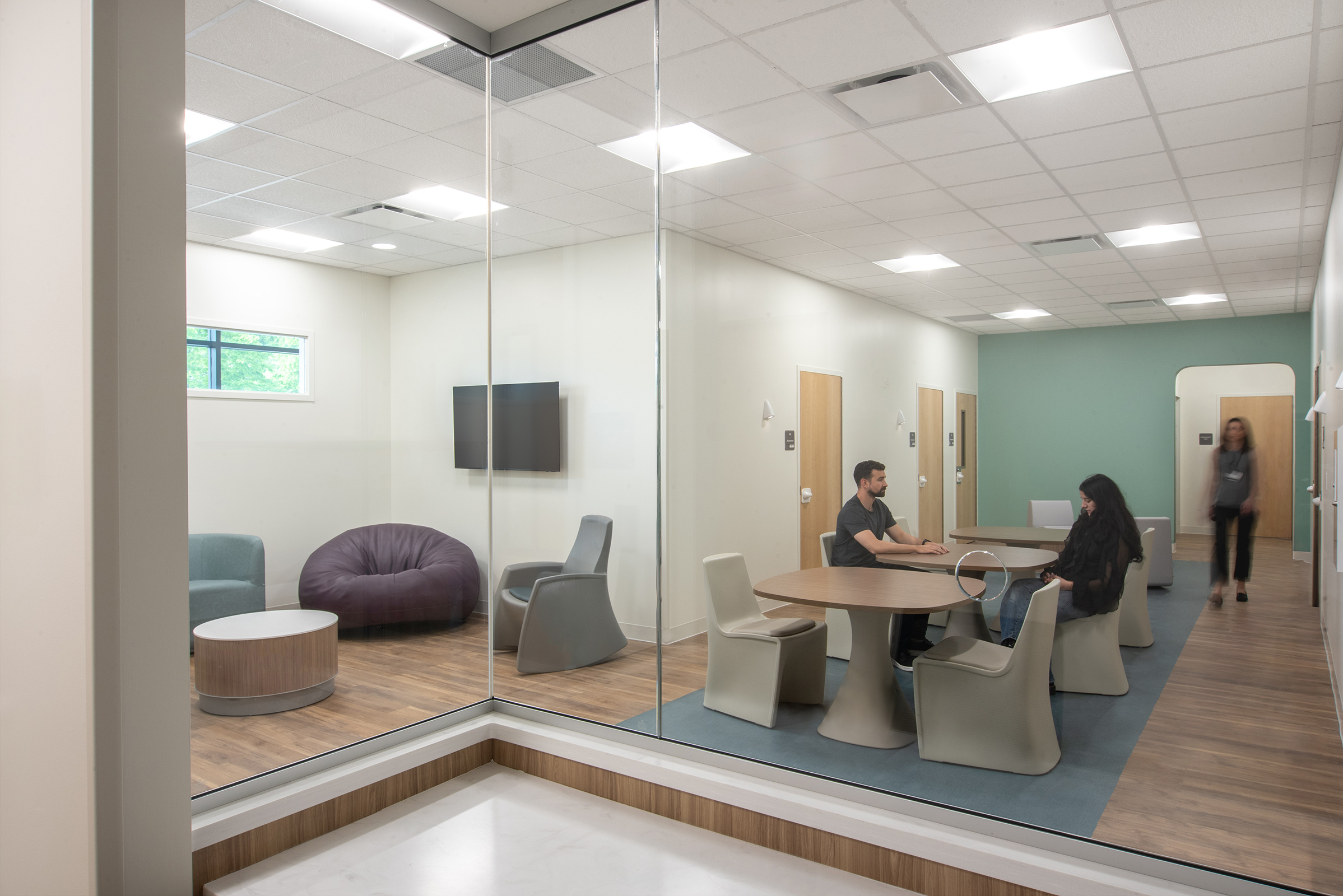
- Natural light and views to support mental wellness
- Soft-weighted furniture that is immovable yet inviting
- Secure bathroom layouts with an anti barricade entry for privacy and monitoring
A small exterior courtyard maximizes access to daylight and provides calming interior vistas. These moves align with trauma-informed design strategies, reducing stress and enhancing patient dignity.
-
Listening Before Designing; Creating A Space That Reflects the Mission
+Detail’s process included shadowing crisis providers, observing intake interviews, and conducting extensive research into behavioral health design best practices. Project Manager Justin Gleason, AIA, MBA conducted two full-day immersions at Coleman, including time spent at their Stark County facility, to ensure the design responded to the real-time needs of providers and patients.
This firsthand research informed critical layout decisions, such as maintaining staff-only pathways between all three units to reduce unnecessary interactions and increase safety. Incorporating private restrooms within every CSU bedroom supported client independence and providing separate pathways for youth and adults helps to alleviate congestion and promote calm.
To support Coleman’s mission and vision, +Detail infused the space with Coleman’s brand, subtly incorporating their signature palette and planning for the future integration of experiential wall graphics that reinforce the organization’s commitment to compassionate mental health care.
As of May 2026, when complete, the Portage Crisis Center will provide a new level of care for individuals experiencing behavioral health crises, offering law enforcement, EMS, and families a dedicated resource outside of jails and emergency departments.
A Career-Defining Project
This project marks a significant milestone, a ground-up facility built from vision to execution. The collaborative, high-stakes nature of the work pushed the team to new levels of leadership, agility, and technical excellence.
From strict behavioral health codes to the intricacies of publicly funded timelines, the Portage Crisis Center embodies +Detail’s belief that design can, and should, serve the most vulnerable in our communities with compassion, clarity, and courage.
Meet the Project Leader: Justin Gleason, AIA, MBA
For Project Director Justin Gleason, great healthcare design begins long before the first drawing is created.
Throughout the Portage Crisis Center project, Justin immersed himself in the day-to-day realities of behavioral healthcare, spending time alongside providers, observing workflows, and listening closely to the needs of staff, patients, and community stakeholders. This hands-on approach helped shape a facility that balances safety, dignity, operational efficiency, and compassionate care while reflecting the unique needs of the community it serves.
"The best design solutions come from intentionally slowing down and listening first. When we understand the people, processes, and purpose behind a space, we can create environments that truly support those they serve."
At +Detail, Justin leads projects across healthcare, behavioral health, higher education, and workplace environments, helping organizations create spaces that improve experiences, strengthen operations, and advance their mission.